









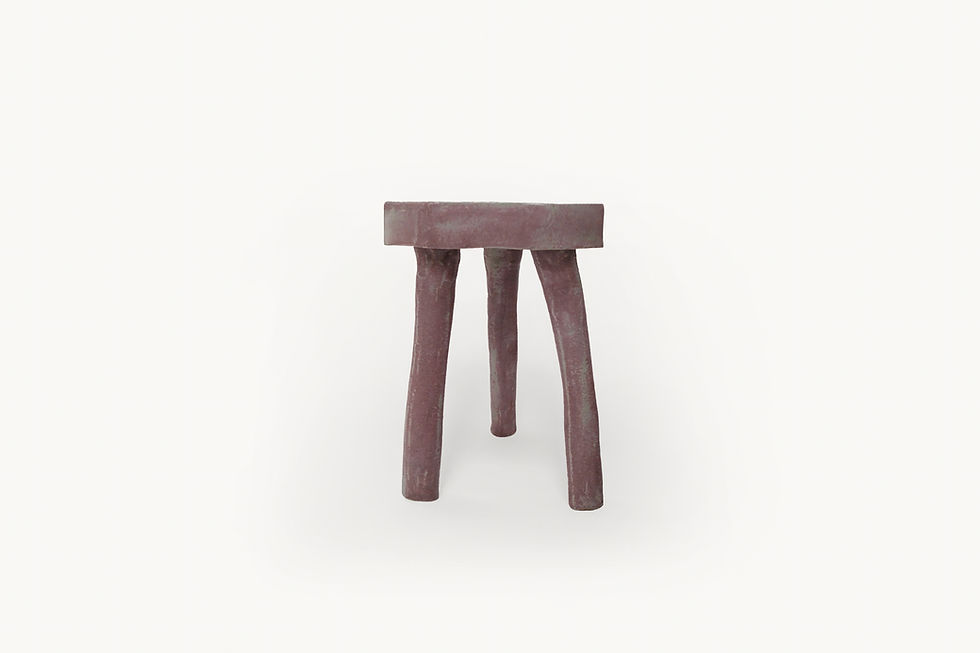


STUDIO VON SCHOENEBECK: Where Furniture Remembers
Munich-based Johannes von Schoenebeck and Magdalena Shterianova operate their self-titled studio at the intersection of furniture, lighting, and objet design. But more than that, they archive evidence of living; use, warmth and ritual.
The subtle wear that occurs naturally when objects exist among people. It lives in the space between sculpture and utility. Chairs mate with one another like puzzle pieces. Candleholders draw guests around a table. Engraved snippets of conversations rest mid-sentence in steel, left forever by the occupant who couldn’t stay to finish their thought.

Permanence is avoided at all costs. Materials transform, and tarnish, and surfaces are etched with writing and wear. The process remains evident long after the object is complete—you know what it went through, not just what it became.

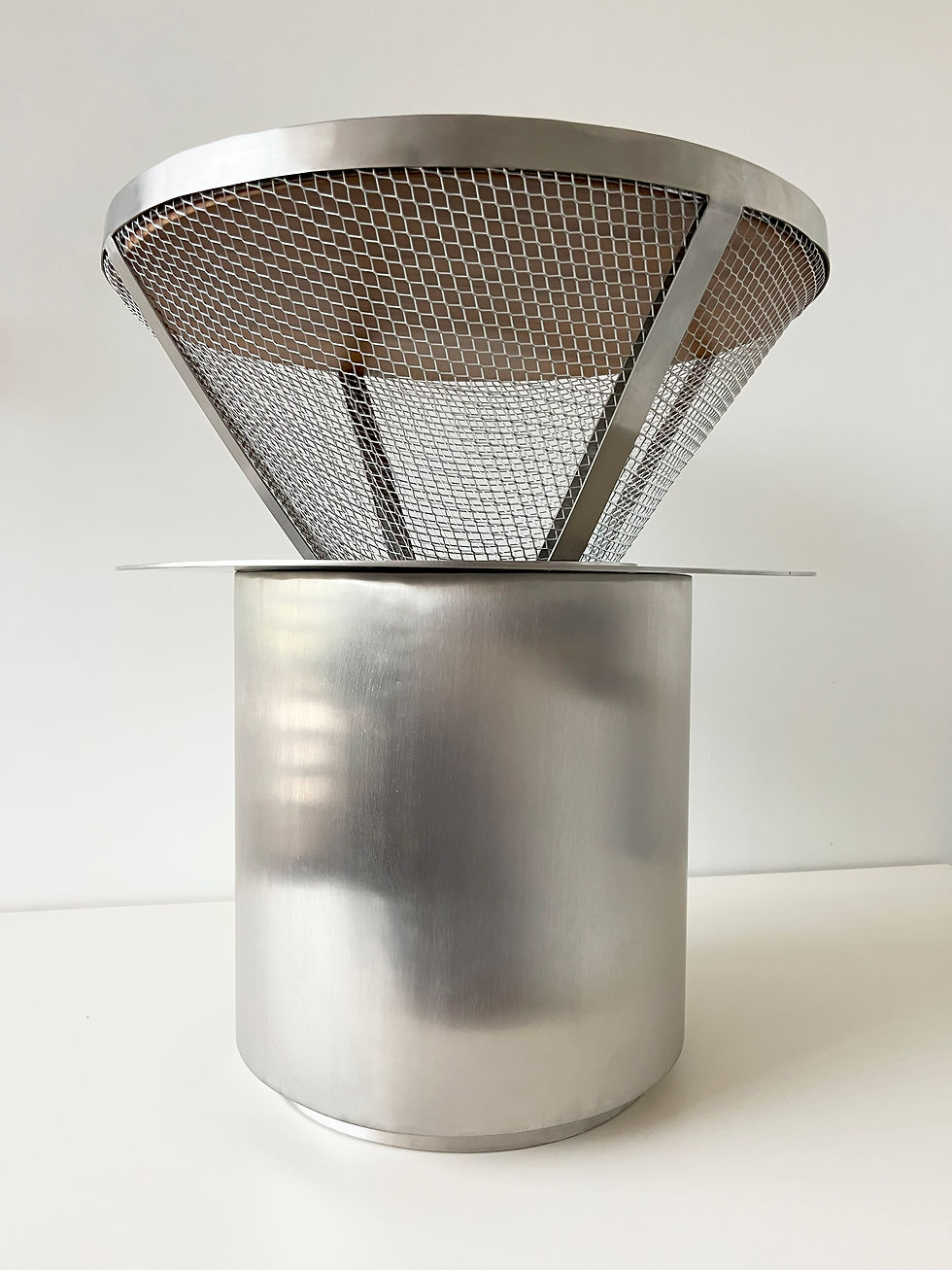
You can see this most literally in their burn furniture series. Wooden structures are bound with steel mesh and burned away, leaving behind a hollow carcass of where something used to be. Fire is used as a means of construction, and though it, flames become the designer.

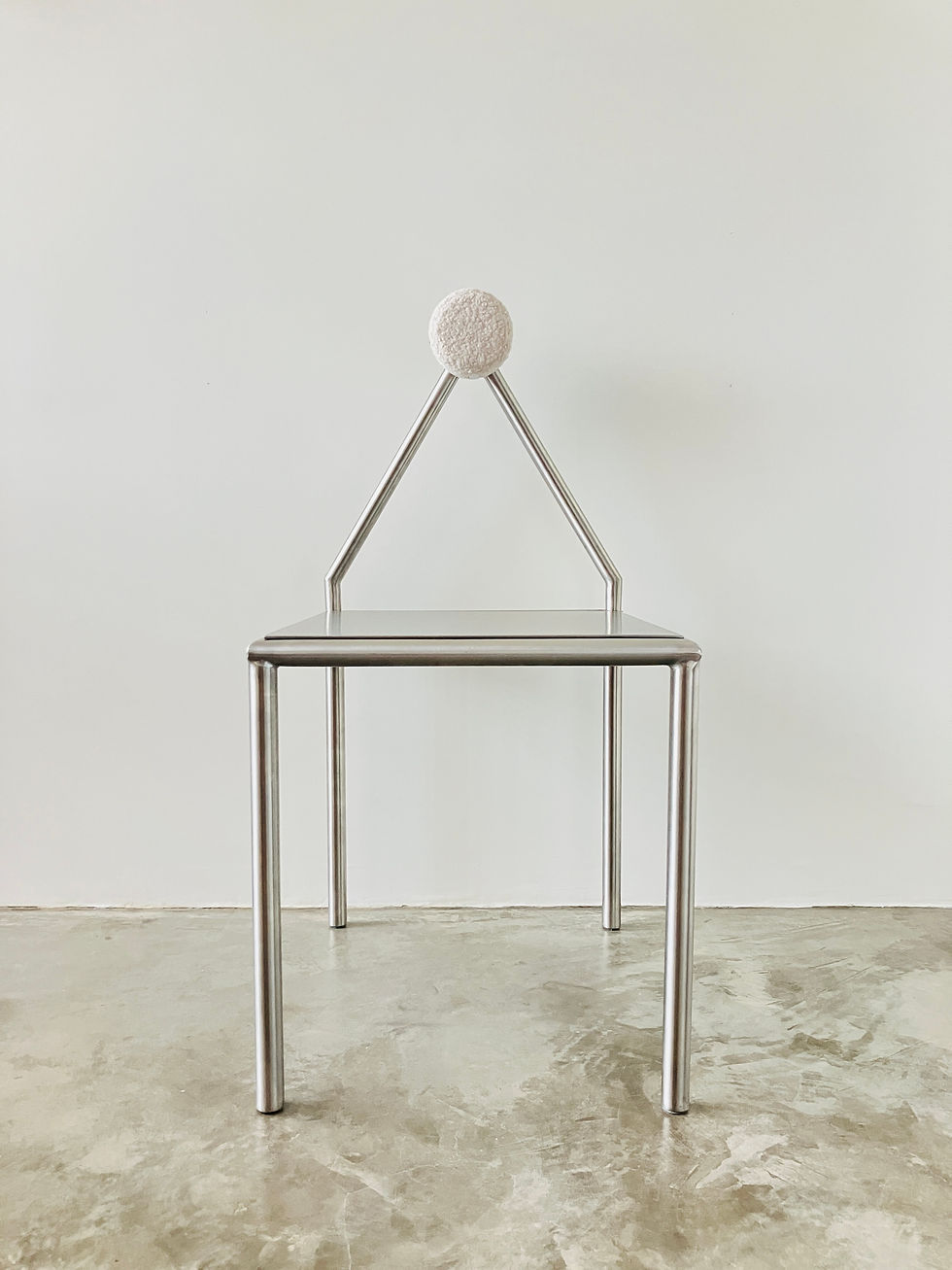
The studio’s chairs reference Mikhail Bulgakov’s The Master and Margarita. Two chairs that physically connect to one another, one slotting inside the other. Dependence, support, and living together. You don’t have to know the reference to understand what the designers are doing.

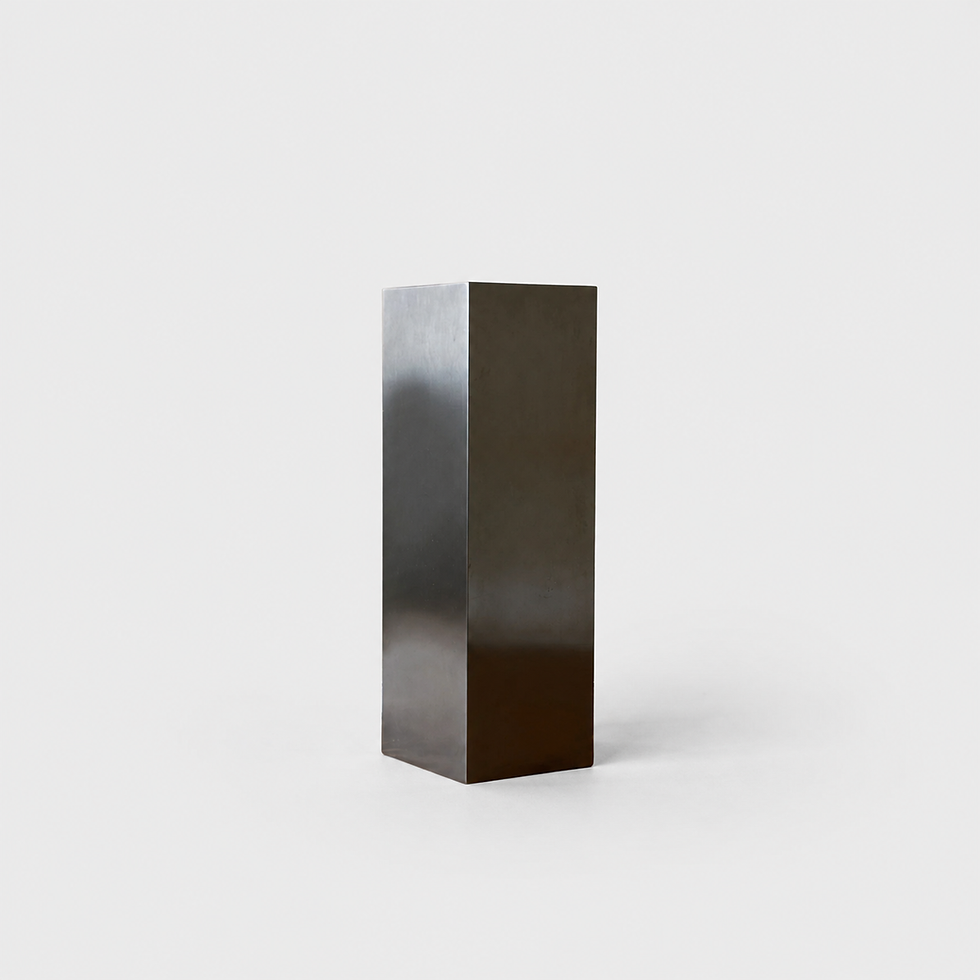
Their candleholders work from the same logic. Mathematical shapes stack to form modular designs that appear architectural from afar, yet become personable as you approach. They don’t ask to be viewed as a display object. You think of nighttime, of lingering at a table long after dinner’s gone cold, candles wax melting onto the wood as you press your glass towards the center, too comfortable to leave.

The studio’s strongest quality is consistency of atmosphere. Every project feels connected to the same emotional climate: memory held inside physical form. Their furniture behaves almost like architecture in that respect. Rooms change around it, and that continuity gives the work coherence without forcing a signature style onto every piece. The projects vary formally, yet the underlying concerns remain stable; fire, intimacy, ritual, absence and preservation.
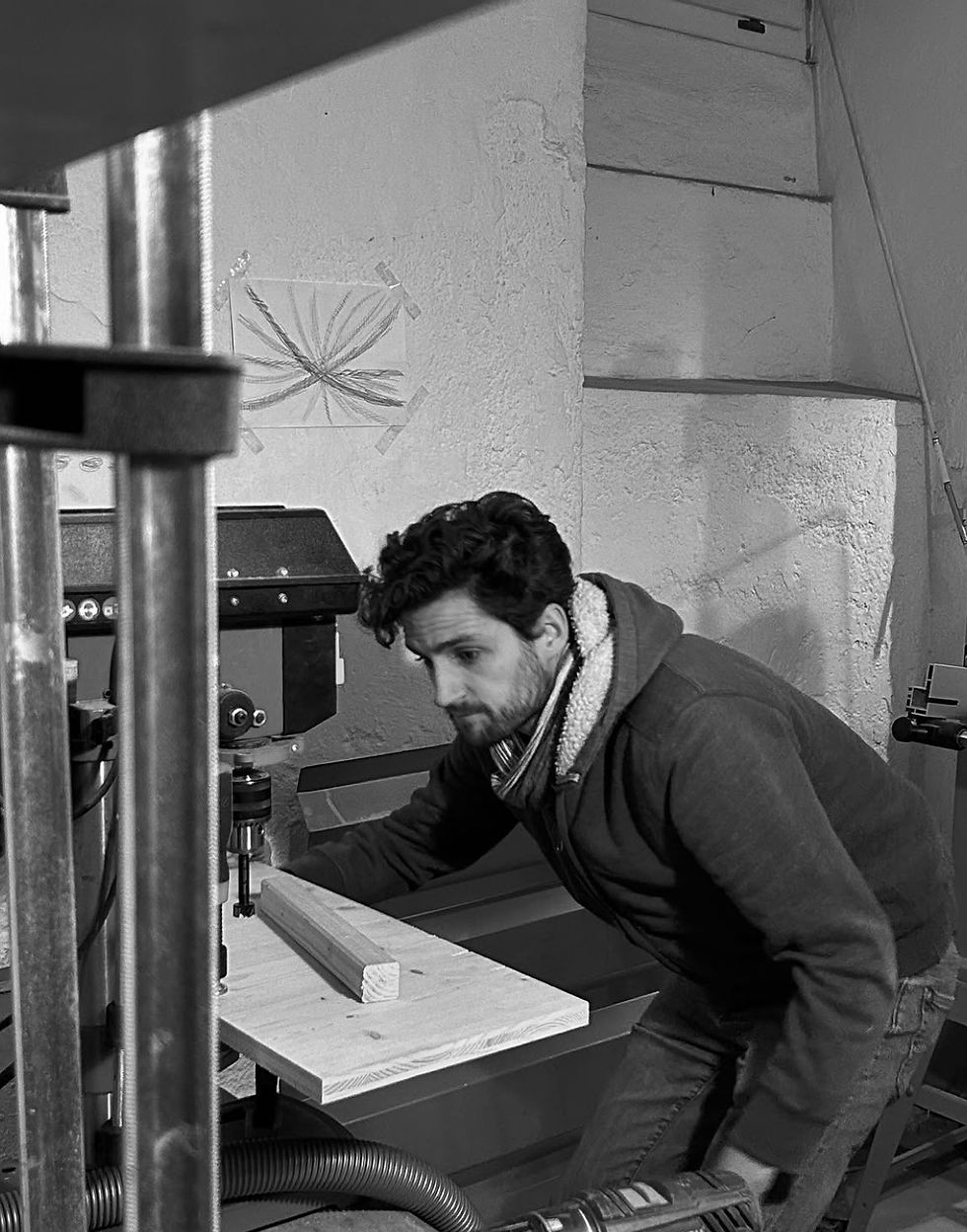
Studio Von Schoenebeck keeps the work grounded in material process instead. Burned wood smells like burned wood. Brushed aluminum reflects light unevenly. Steel holds fingerprints for longer than expected, the objects stay specific. What makes the studio's work so lasting is its attention to detail.

Their pieces don't try to be flashy or rely on complicated symbols. Instead, they focus on being physically present and gaining meaning over time. Most furniture just changes the way a room looks. But these pieces actually change the way you remember the room, even if it's just a little bit. They have a way of altering the space that stays with you.


Comments