









The Red Room: Burgundy, Rose and the Art of an Enveloping Interior
There is a particular kind of interior where pink, burgundy and deep red stop behaving like colours and become an atmosphere. Walls are washed in dusty rose, velvet fades toward wine, carpets introduce rust and crimson, and dark wood or aged brass emerges from the background almost like shadow.

These rooms feel collected rather than decorated. Nothing is too clean, too matched or too new.

The visual language often recalls Moroccan and North African interiors, but it belongs to a much wider world. Marrakech has a long architectural tradition of lime plaster, tadelakt, carved wood, zellige and ornamental plasterwork, while Moroccan and Andalusian architecture historically built interiors through layers of tile, carved plaster and timber rather than leaving surfaces bare. Similar ideas of saturated colour, elaborate textile, carved furniture and ornament can also be found across Indian, Ottoman, Persian and European interiors influenced by these traditions.

What ties them together is richness of surface.

The pink is rarely a perfect pink. It is faded, chalky, stained or darkened at the edges. Burgundy moves into brown. Crimson meets terracotta. The walls have marks; the velvet carries changes in its pile; silk catches the light differently with every fold, and age becomes part of the palette.

This is what prevents the rooms from feeling overly romantic or decorative. Against the softness of rose and velvet come blackened timber, heavy carved doors, geometric floors, aged metals and dense antique rugs. Sweetness is constantly interrupted by something darker.
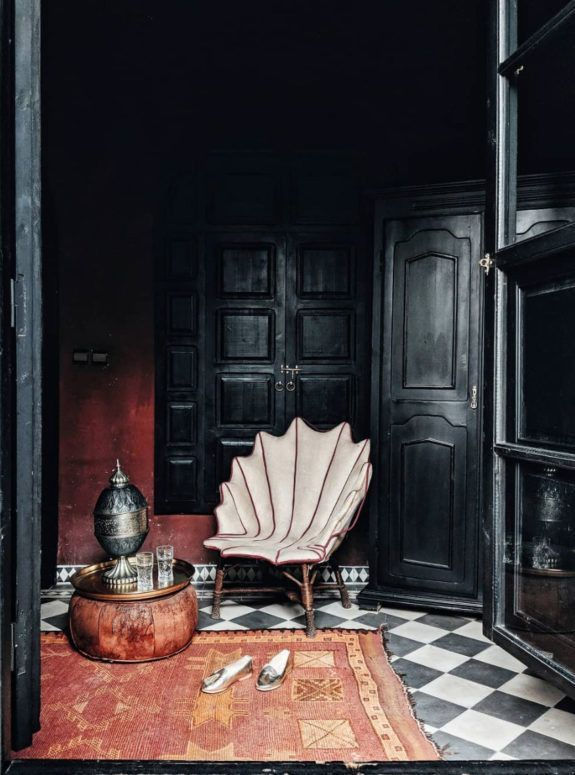
Textile is equally important. Curtains, tapestries, upholstered walls, embroidered cushions and velvet seating blur the boundary between furniture and architecture. Rather than placing isolated decorative objects inside a room, the entire space begins to feel dressed.

And perhaps this is why these interiors feel so intimate. They reject the contemporary obsession with brightness, openness and visual emptiness. Instead, they create enclosure. Light is absorbed rather than reflected. Objects disappear slightly into their surroundings. Pattern sits against pattern and red against another shade of red.

For a contemporary burgundy interior, the lesson is less about reproducing a specific Moroccan or historical style than adopting this attitude toward colour and material. A dusty pink plaster wall, an oxblood textile, dark carved wood, faded rugs, silk, velvet and aged brass can create the same sense of depth without becoming thematic.


Comments