









Gonzalo Fonseca: Architecture of Memory in Stone
There’s a moment when sculpture stops being about representation, and it becomes a complex, architectural, and strangely familiar language. This is where Gonzalo Fonseca's work emerges. Born in Montevideo in 1922, Fonseca was never content with surface. From the very beginning, his art felt like a dialogue between what is seen and what is remembered, between the ruin and the monument.

Fonseca began life as a student of architecture, but that alone couldn’t contain him. Drawn instead to the legendary "Taller Torres-García", the Uruguayan modernist workshop that shaped so many vital voices of the mid-20th century, he learned ideas about structure, symbol, and the cosmic. Yet Fonseca was never a disciple in the strict sense, but rather a thinker who translated his influences into his own visual universe.

By the late 1960s, Fonseca’s work had begun to merge into the sculptures that define his legacy. These aren’t stone figures or abstract gestures in the conventional sense, but rather mini-architectures, worlds in themselves. Towers with hidden stairs; monoliths with niches and caverns; forms that could be ancient temples or fragments imagined from a distant future. He worked primarily in marble, limestone, and travertine, carving surfaces that feel like maps of memory, familiar yet stubbornly elusive.
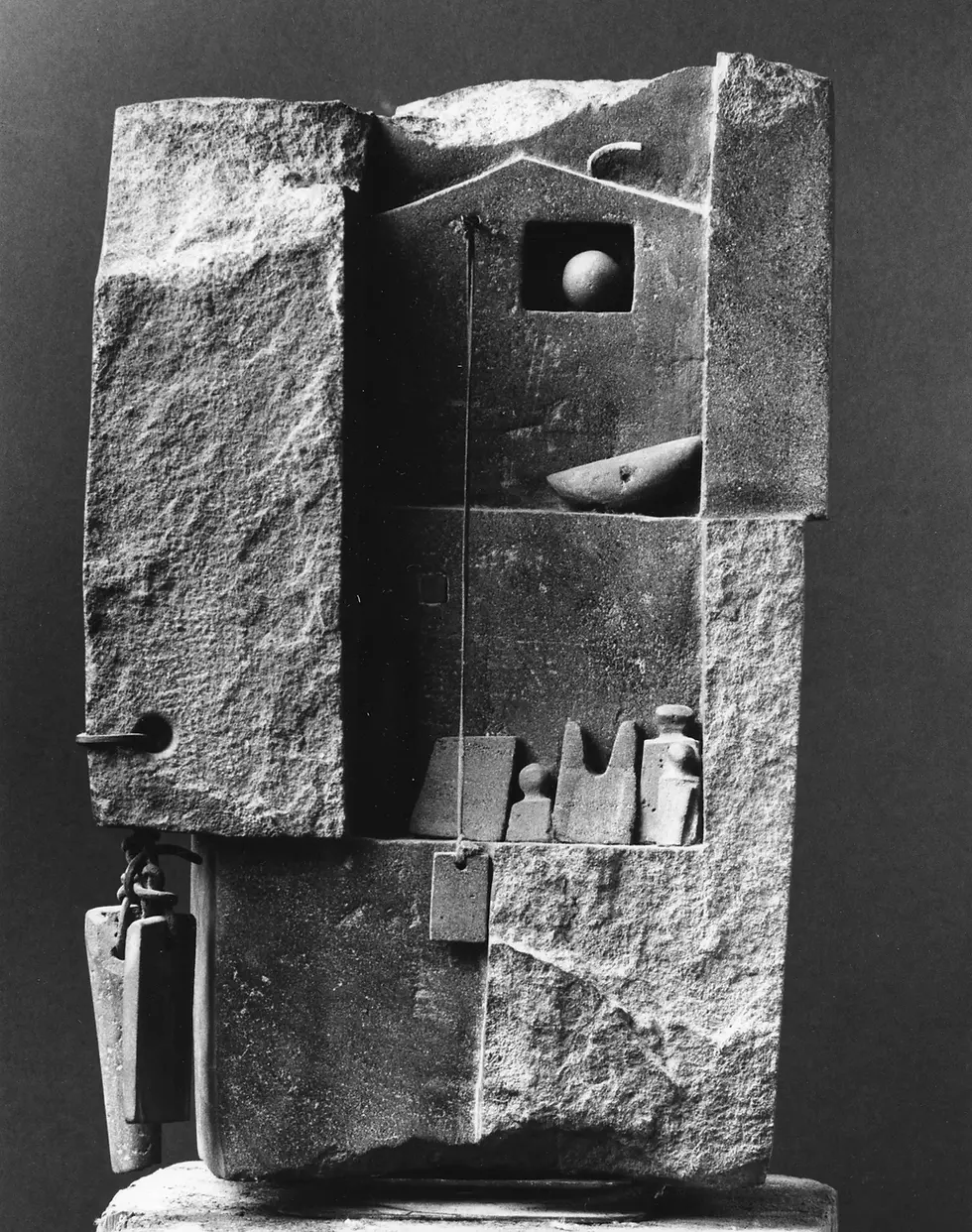
What strikes the most about Fonseca’s sculptures is how they occupy a poetic space between history and imagination. They don’t reconstruct the past, they invoke it. Like a poem built from found ruins, they suggest civilizations we’ve never seen but somehow know. His “architectures” echo pre-Columbian sites, ziggurats, and Mediterranean ruins, but filtered through a deeply personal lens: one shaped not just by travel, but by a lifetime of reading, curiosity, and restless exploration.

Walking around a Fonseca sculpture is like stepping into a secret grammar of space. There’s an invitation to circle, to peer into small apertures and to imagine footsteps descending a stair that doesn’t lead anywhere but everywhere. In that sense, they are not objects to be understood at a glance, they are experiences. They ask something of us: patience, curiosity, presence.

His life was a geography in itself: early years in Uruguay, long seasons in New York, summers in Pietrasanta near the quarries of Carrara, and constant journeys through Europe and the Near East. All of it is embedded in his work, not as literal references, but as layers of memory and form, sculpted with a kind of archaeological empathy.
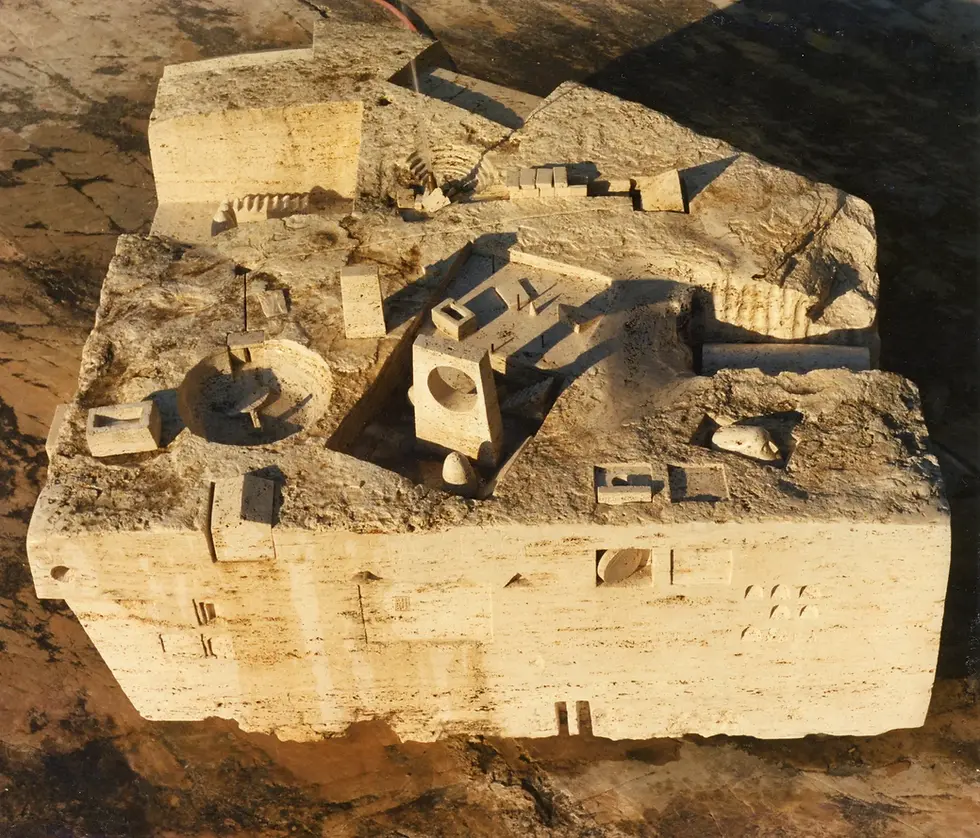
Fonsecas influence is not really about a school or movement. It is more subtle than that. What Fonseca does, is to remind us that sculpture is actually a way of thinking. He shows us that the shape and form of something can be a question, rather than just a statement. When we look at his pieces we are reminded that everything is temporary and that we are always striving for something.
His work is about how the world we build around us interacts with the way we see things inside our minds. In a world where people want everything to be fast and easy to understand, Fonseca likes to keep things mysterious. The interesting thing about his work is the way it balances structure and puzzle. This is what makes his art so important and lasting, balancing between what we can see and what we do not know.

Today, his work can be found in collections around the world. Pieces that seem to murmur rather than shout. And perhaps that’s the right way to encounter him: not as a spectacle, but as a quiet companion on the long walk through memory, myth, and the architecture of the unseen.

Comments